


Profesjonelle løsninger på betongtilsetningsstoffer, Betongskummende middel, Supermykner, CLC blokkerer tilsetningsstoffer, og skummaskin


Betongfiber

Factory Direct Stable Supply Wood Fiber For Cement Concrete Mortar Used Wood Fiber Xylem Cellulose Fiber

Ar Glass Fiber Roving Fiberglass 2400tex for Spray up Concrete

PP Concrete Fiber PP Polypropylene Fiber form for Construction 12mm 19mm

Composite Material Glass Fiber Chopped Strand Chopped Fiberglass for Reinforcement Concrete

Steel Fibers for Concrete with Diameter 0.70mm,length 30mm and tensile strength 1100MPa

Basalt 3D Fiber Mesh For Concrete Panels Construction in the Wall

Virgin PET Monofilament Fiber White 3-25mm Polyester Concrete Fiber

glassfiber xinbang fiber glass roll self adhesive net wall meshes kit gypsum board drywall joint tape for concrete stucco

The Building Reinforces Custom Carbon Cloth Ud Carbon Fiber 12k 200g Unidirectional Carbon Fiber Mesh Concrete Renforcment Woven

High-Strength Basalt Chopped Fiber for Reinforcement in Concrete Construction

Continuous Basalt Fiber roving for concrete reinforcement

Concrete Reinforcement Metallic Steel Fiber For Industrial Applications
Overview of concrete fiber
Fiber used in construction projects is a thin and long material with an aspect ratio of generally more than 100, and has a certain tensile strength (also called breaking strength), elastic modulus (also called initial modulus) and ultimate elongation (also called breaking elongation). The fibers used in construction projects mainly refer to short-segment discontinuous fiber materials that can be evenly distributed in concrete and can strengthen the concrete structure.
According to the different fiber materials used, they can be divided into: natural fibers or artificial fibers; organic fibers or inorganic fibers, osv. Specifically, they can be divided into natural organic fibers (various hemp fibers, wood pulp fibers, coconut shell fibers (collectively referred to as cellulose fibers) and animal bristles, osv.); natural inorganic fibers (asbestos fibers, needle-shaped wollastonite, osv.), artificial organic fibers (also called synthetic fibers: polypropylene fibers, polyacrylonitrile fibers, polyvinyl alcohol fibers, polyester fibers, polyamide fibers, ultra-high molecular weight polyethylene fibers, osv.), and artificial inorganic fibers (metal fibers, glass fibers, basalt fibers, mineral wool fibers, and carbon fibers, osv.). According to the different elastic modulus of the fiber used, det vil si, whether the elastic modulus of the fiber is higher or lower than the elastic modulus of the matrix it is mixed with, it can be divided into high elastic modulus fiber and low elastic modulus fiber; according to the different matrix materials it is mixed with, it can be divided into: fiber for cement concrete, fiber for mortar (cement paste), fiber for asphalt concrete, osv.
Fiber concrete can be regarded as a concrete compounded with a certain amount of short, uniformly dispersed, and discontinuous fibers added to ordinary concrete. The combination of fiber and concrete matrix improves the inherent weaknesses of concrete and has a multi-faceted impact on the performance of concrete. The improvement of the crack resistance and durability of fiber concrete is of great significance to the construction of high-quality, beautiful and durable projects.


The role of fiber in concrete
Including fiber to concrete can increase the strength and split resistance of the material, and at the same time has a specific impact on the strength and rigidity of concrete
Boost the tensile toughness of concrete
The stamina of concrete generally comes from the cement and accumulation in the mixture. The tensile strength of concrete is extremely reduced. Adding a proper amount of fiber can make concrete have better tensile toughness, thus boosting the total strength of the concrete structure.
Enhance the sturdiness of concrete
The fiber in concrete can enhance the residential or commercial properties of microcracks in concrete, minimize the water leaks in the structure and air permeability in concrete, boost the frost resistance and sturdiness of concrete, and thus extend the service life of concrete.
Boost the influence performance of concrete.
After adding fiber, the energy absorption capability of concrete can be enhanced, therefore improving the influence performance of concrete and minimizing the degree of stamina reduction.
Types of fibers
Steel fiber
Metal fiber is a standard fiber contributed to concrete, such as steel fiber, aluminum alloy fiber, and so on. They have high toughness and large ductility. After adding them to concrete, they can enhance the seismic resistance and crack resistance of concrete, yet steel fiber is prone to rust.
Synthetic fiber
Artificial fiber products have good deterioration resistance and alkali resistance, mainly polypropylene fiber and nylon fiber, and so on. The addition of these fibers can efficiently enhance the fracture resistance and bending and tensile resistance of concrete, thus improving the overall performance of concrete.
Glass fiber
Glass fiber is cheap and is included big amounts. It is made use of greater than iron cable. It can boost the fracture resistance and impermeability of concrete and is challenging to corrosion.
The result of fiber on concrete toughness
The impact of fiber on concrete stamina generally consists of the following aspects:
Fiber type and size
Fibers of different types and sizes have various impacts on the stamina of concrete. Generally speaking, the longer the fiber length, the greater the result on the stamina of concrete.
Fiber enhancement
The quantity of fiber included likewise has a wonderful impact on the strength of concrete. Inadequate will certainly have virtually no result, while too much might cause the strength of concrete to lower.
Fiber circulation
Irregular circulation of fibers might trigger the strength of concrete to reduce, so when adding fibers, it is needed to pay attention to the full mixing of concrete and fibers.
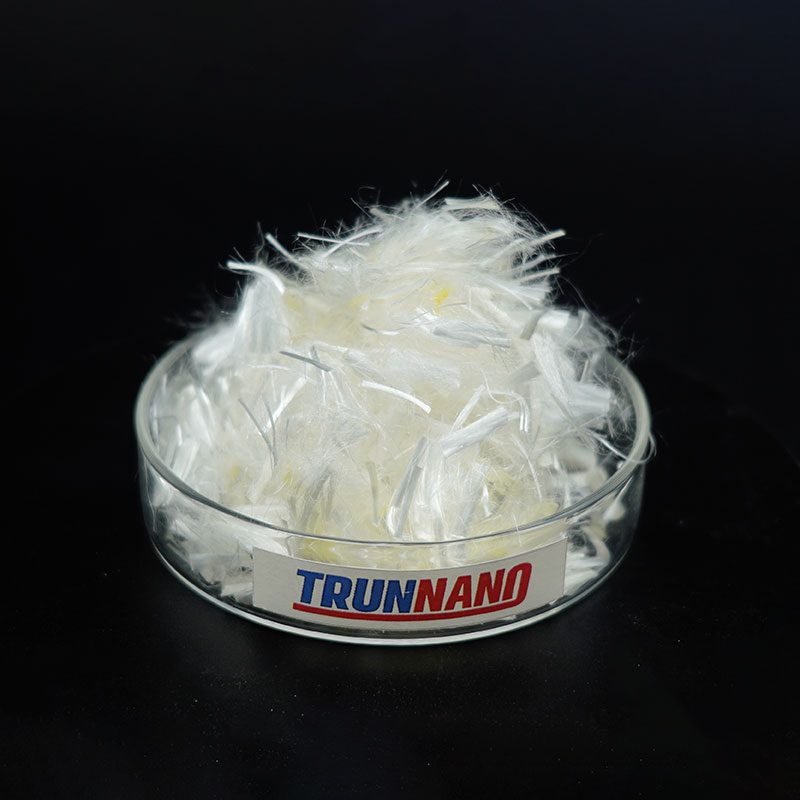
Applications of Concrete Fiber
Building and construction: Used in slabs, pavements, bridge decks, and precast elements to raise durability and decrease upkeep.
Roadways and Freeways: Improves toughness and decreases the threat of fractures and rutting.
Industrial Floors: Gives resistance to heavy tons and influence in storehouses and manufacturing facilities.
Repair: Ideal for overlays and repair services where rapid stamina gain and very little downtime are needed.
Residential Projects: Made use of driveways, patio areas, and walkways to stop fracturing and improve visual appeals.
Bedriftsprofil
ConcreteFashion is the global leader in Low-Density Cellular Concrete (LDCC), Celluar lett betong (CLC), og avanserte konstruerte skumløsninger. Kjent globalt for sitt engasjement for forskning, innovasjon, og anvendt ekspertise, vi har levert konstruerte skumløsninger siden begynnelsen av 2012-tallet.
Vi kan levere høy kvalitet Betongfiber. Selskapet har en profesjonell teknisk avdeling og kvalitetstilsynsavdeling, et velutstyrt laboratorium, og utstyrt med avansert testutstyr og kundeservicesenter etter salg. Send oss en e-post eller klikk på de nødvendige produktene for å sende en forespørsel.
Hvis du vil vite mer om Betongfiber, vær så snill og kontakt oss: [email protected]

Package of Concrete Fiber
25Kg vevd ytterpose foret med plastpose, oppbevares ved romtemperatur borte fra lys, fuktighet og regn.
Storage of Concrete Fiber
Papirplastkomposittemballasje foret med plastposer.
FAQs of Concrete Fiber
Q: How do fibers improve concrete?
EN: Fibers act as internal reinforcement, bridging micro-cracks and improving the overall mechanical properties of the concrete.
Q: Are concrete fibers costly?
EN: The cost differs depending upon the sort of fiber and quantity required. Vanligvis, while fibers might contribute to initial prices, they can decrease long-term expenditures via enhanced toughness and fewer repair work.
Q: Kan betongfibre skifte armeringsjern?
EN: While fibers boost several aspects of concrete performance, they typically do not completely change traditional rebar in important load-bearing frameworks. Likevel, they can often decrease the amount of rebar needed.
Q: Exist any kind of environmental interest in using concrete fibers?
EN: The ecological impact depends on the type of fiber made use of. Synthetic fibers are stemmed from petrochemicals, whereas all-natural fibers are biodegradable but may have restricted performance. Sustainability factors to consider ought to direct the selection of fiber type.
Q: Just how do I mix concrete fibers?
EN: Fibers are normally added directly to the concrete mixer at the specified dose rate. Proper mixing guarantees uniform distribution throughout the concrete. Maker guidelines should constantly be followed.