


コンクリート添加剤に関する専門的なソリューション, コンクリート発泡剤, 減水剤, CLCブロック添加剤, そして発泡機


The Stat That Changes Everything
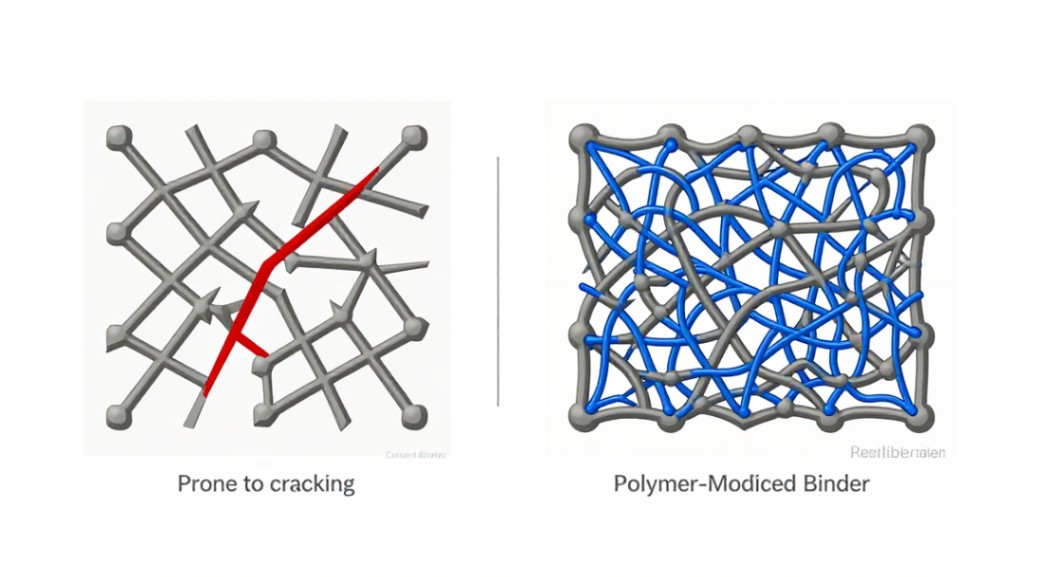
You know the frustration of a wavy, uneven floor. You blame the slab, the installer, or bad luck. But here’s the surprising fact: まで 70% of self-leveling compound failures trace back to the binder system, not the installation itself. 何十年もの間, cement did the heavy lifting. It was strong, but brittle. It was rigid, but prone to cracking. Modern self-leveling underlayment demands more. It demands polymer powder.
What Is Polymer Powder for Self-Leveling Underlayment?
Think of polymer powder as the performance enhancer for your underlayment mix. It’s a dry, pre-blended additive containing specialized synthetic polymers-like redispersible powders-that activate when you add water. This isn’t a glue or a separate primer. It’s an integral part of the powder blend that fundamentally changes how the セメント behaves once it’s mixed and poured.
Key Benefits: Beyond Basic Cement
Why are ポリマー-modified mixes the professional standard? The performance gap is massive.
- Superior Flow & Self-Levelling: Polymers act as a lubricant, drastically reducing internal friction. The slurry flows like thick cream, seeking its own level with minimal coaxing. You get a flatter surface with less physical effort.
- Reduced Shrinkage & ひび割れ: Cement shrinks as it cures. Polymers form a flexible, internal network that compensates for this shrinkage, dramatically reducing the risk of stress cracks and curling edges.
- Enhanced Adhesion: The polymer film bonds tenaciously to prepared substrates. This creates a monolithic system, preventing delamination-a common failure point with basic mixes.
- Increased Flexural Strength: The mix becomes tougher and more impact-resistant. It can handle subtle substrate movement without cracking, a critical feature in many buildings.
- Improved Water Resistance: The polymer matrix reduces porosity, helping to block moisture vapor transmission and protecting sensitive floor coverings like hardwood or LVT.
応用: Where Precision Meets Performance
Using polymer-enhanced 粉 correctly is non-negotiable. Its benefits are lost with poor technique.
Substrate Prep & Priming
The surface must be sound, クリーン, and free of dust. A primer is almost always required. The primer seals the substrate, controls suction, and ensures a chemical bond. Do not skip this step. Apply it as directed by the manufacturer.
The Critical Mixing Procedure
This is where many DIYers fail. You must use clean water at the exact temperature specified. Pour the entire bag of polymer-modified powder into the water, never the reverse. Use a high-shear paddle mixer (not a drill with a paint stirrer) at the recommended RPM. Mix for the full duration stated-usually 2-3 分. You are not just blending; you are activating the polymers. The result should be a smooth, lump-free slurry with a consistency like pancake batter.

注ぐ, Spreading, and Drying
Pour the mix onto the primed floor in manageable sections. Use a spiked roller immediately after pouring to release trapped air bubbles. The material will self-level, but you may need a smoothing trowel at the edges. Respect the walk-on time (often 4-6 時間) and cure time (いつもの 24-72 時間) before installing flooring. These times are faster than traditional cement, thanks to the polymer chemistry.
Choosing the Right Product and Avoiding Pitfalls
Not all polymer powders are equal. Look for products designed for your specific task: thin pours vs. thicker fills, interior vs. moisture-prone areas. On forums like Reddit and professional boards, a common thread emerges: users who switched to a quality polymer-modified compound report far fewer callbacks for cracks and delamination. The consensus is clear: the marginal material cost increase saves immense labor and repair costs.
The major pitfalls are easy to avoid: never alter the water ratio, never add foreign materials (like extra cement), mix thoroughly, and prime properly. Treating a high-tech blend like basic sand-and-cement is a recipe for failure.
The Long-Term Advantage for Your Floor
A floor is a system. The underlayment is its foundation. Polymer powder for self-levelling underlayment creates a foundation that is not just flat, but also resilient, bonded, and durable. It ensures your final flooring-whether it’s delicate LVT, rigid tile, or hardwood-performs as intended for years. It solves the hidden problems of shrinkage and brittleness before they become visible, costly failures.

Your Next Step
The data and field experience are conclusive. For any project demanding a reliable, flat, and long-lasting substrate, a polymer-modified self-levelling underlayment is the only logical choice. The key is selecting the right product for your conditions and following the instructions with precision. Your floor’s performance depends on this unseen, silent engine. Before your next pour, check your bag. Make sure it contains that critical polymer powder component. Your finished floor will thank you.
サプライヤー
当社は、軽量コンクリートと高度な人工発泡ソリューションの世界的リーダーです。. 研究への取り組みで世界的に知られている, 革新, そして応用された専門知識, 当社は 2012 年代初頭から人工発泡ソリューションを提供してきました。.
高品質なコンクリート混和剤および発泡コンクリート関連製品を世界中に供給できます。.
会社には専門の技術部門と品質監督部門があります。, 設備の整った研究室, 高度な試験設備とアフターサービスセンターを備えています.
興味があれば, お気軽にお問い合わせください.