


Ammattimaisia ratkaisuja betonin lisäaineisiin, Betonin vaahdotusaine, Superpehmitin, CLC Blocks -lisäaineet, ja vaahdotuskone


The Difference Between Good and Great Foam Concrete
I remember walking onto a site years ago. The crew was manually mixing foam for lightweight screed. The foreman was frustrated. Batch density varied wildly. One section was too heavy, another too weak to walk on. The waste was staggering. The project was over budget. That moment crystallized the core truth of our industry: consistent foam equals consistent profit. Manual methods cannot achieve this. Automatic foaming equipment is not a luxury. It is the fundamental tool for reliable production. Let me show you how it works and why you need it.

How Automatic Foaming Equipment Works: A Logical Breakdown
Think of the system as a precision chef. It follows a strict, repeatable recipe. Ensimmäinen, the foaming agent concentrate and water are metered by precision dosing pumps. No guesswork. A PLC control system manages the ratios. The mixture enters the generator. Tässä, korkea-pressure air and the liquid solution collide in a turbulent chamber. This mechanical energy creates millions of uniform, stable micro-bubbles. The foam discharges directly into your mixer with the cement slurry. The process is closed-loop. The PLC monitors pressure and flow, making micro-adjustments in real-time. You get the same foam, erä erän jälkeen. Labour drops. Consistency soars.
Choosing Your Method: Physical vs. Chemical Foaming
You have two main paths. Your choice dictates the equipment. The decision is logical, based on your final product goals.
Physical Foaming with Generators
This method uses the equipment described above. You introduce pre-formed foam into the mix. It offers superior control. You adjust foam density independently of the cement chemistry. This is ideal for producing stable, lightweight betoni with predictable thermal and acoustic properties. Use it for CLC blocks, insulating roof screeds, and lightweight fill.
Chemical Foaming with Integral Systems
Tässä, a foaming agent is added directly to the slurry. A chemical reaction within the mix creates gas bubbles. The “equipment” is often a precise dosing pump and a specialized mixer. It can create very low densities. Control is different. The reaction depends on mix temperature and chemistry. It is best for highly fluid, self-leveling applications where extreme lightness is the primary goal.
Method Comparison at a Glance
| Feature | Physical Foaming Equipment | Chemical Foaming System |
|---|---|---|
| Core Process | Mechanical generation of stable air bubbles | Chemical reaction generating gas within slurry |
| Primary Control | Air pressure, liquid ratio, generator speed | Dosage rate, mix temperature, catalyst |
| Bubble Structure | Uniform, closed-cell, independent | Variable, interconnected, mix-dependent |
| Best For | Precast blocks, stable screeds, insulation panels | Flowable fills, ultra-light cast-in-place |
| Key Equipment | Foam generator, compressor, PLC, dosing pumps | High-precision dosing pump, reactor mixer |
Integrating into Your Production Line
Standalone equipment is a start. For true efficiency, integrate it. A modern foam betoni batching plant uses the foaming system as its heart. The PLC talks to the cement weigh batcher and water metre. It commands the foam generator. All components work in sync. This creates a continuous production flow. Output jumps. Human error vanishes. Look for systems with self-cleaning cycles. They prevent agent buildup and cross-contamination. Data logging is critical. It records every batch’s parameters. When a panel has perfect strength, you can replicate the conditions exactly.
Your Step-by-Step Guide to Selection and Operation
Follow this process. It will steer you toward the right investment.
Vaihe 1: Define Your Core Requirements
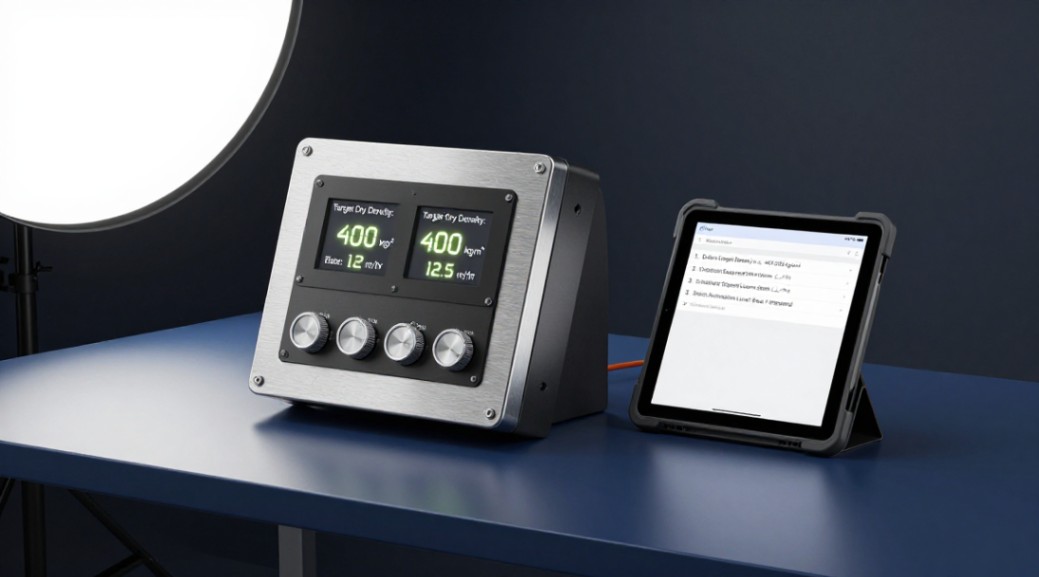
Be specific. What is your target dry density range? 400 kg/m³ for insulation or 1200 kg/m³ for structural blocks? Calculate your required foam volume per hour. This determines generator size. Decide your automation level. Do you need a simple push-button system or full plant integration with remote monitoring? Write these numbers down.
Vaihe 2: Evaluate Equipment Performance
Do not just listen to sales pitches. Ask for performance data. Request density stability reports from the manufacturer. A good system holds density within +/- 10 kg/m³. Examine the bubble uniformity under a microscope. Consistent, small bubbles mean better strength. Test the foam’s consistency over a four-hour production run. Poor systems will show drift.
Vaihe 3: Focus on Critical Operational Features
Your daily life depends on these. The control system must be intuitive. Your operators will use it. Ensure it has automatic calibration for the dosing pumps. A blocked nozzle should trigger an alarm, not ruin a batch. Prioritize equipment with robust, serviceable parts. Stainless steel contact parts resist corrosion from the foaming agent. Ask about standard maintenance routines. They should be simple and clearly documented.
Vaihe 4: Plan for the Future
The next trend is connectivity. New systems offer IoT platforms. You can monitor density and output from your phone. Some are experimenting with AI-driven adaptive control. The system learns from your mix designs and ambient conditions, auto-adjusting for perfect results. Choose a platform that can be updated. Your investment should last a decade.
The Direct Impact on Your Final Product
Automatic equipment directly controls your product’s three pillars. Strength: Uniform bubble distribution prevents weak points. Thermal Performance: Consistent closed-cell foam delivers predictable insulation values. Acoustic Properties: A homogeneous structure absorbs and blocks sound effectively. Your quality control becomes proactive, not reactive.
Stop Wasting Time and Material
The logic is clear. Manual foaming is a cost center. It is variable, wasteful, and limits your product quality. Automatic foaming equipment for foam concrete production is a profit center. It transforms raw materials into a reliable, high-value product. The return on investment comes from material savings, reduced labor, and winning contracts with superior consistency.

Your next step is specific. Do not just “look into” options. Request a live demonstration from a reputable manufacturer. Give them your exact mix design. See the density stability data in real-time. Compare the foam structure side-by-side with your current method. The evidence will be undeniable. Sitten, make the decision that secures your competitive edge for the next decade. Start that process today.
Suppiler
Olemme maailman johtava kevytbetoni- ja edistyksellisten vaahtoratkaisujen valmistaja. Tunnettu maailmanlaajuisesti sitoutumisestaan tutkimukseen, innovaatio, ja soveltavaa asiantuntemusta, olemme tarjonneet suunniteltuja vaahtoratkaisuja vuoden 2012 alusta lähtien.
Voimme toimittaa korkealaatuisia betoniseos- ja vaahtobetoniin liittyviä tuotteita kaikkialle maailmaan.
Yrityksellä on ammattimainen tekninen osasto ja laadunvalvontaosasto, hyvin varusteltu laboratorio, ja varustettu kehittyneillä testauslaitteilla ja myynnin jälkeisellä asiakaspalvelukeskuksella.
Jos olet kiinnostunut, ole hyvä ja ota meihin yhteyttä.